
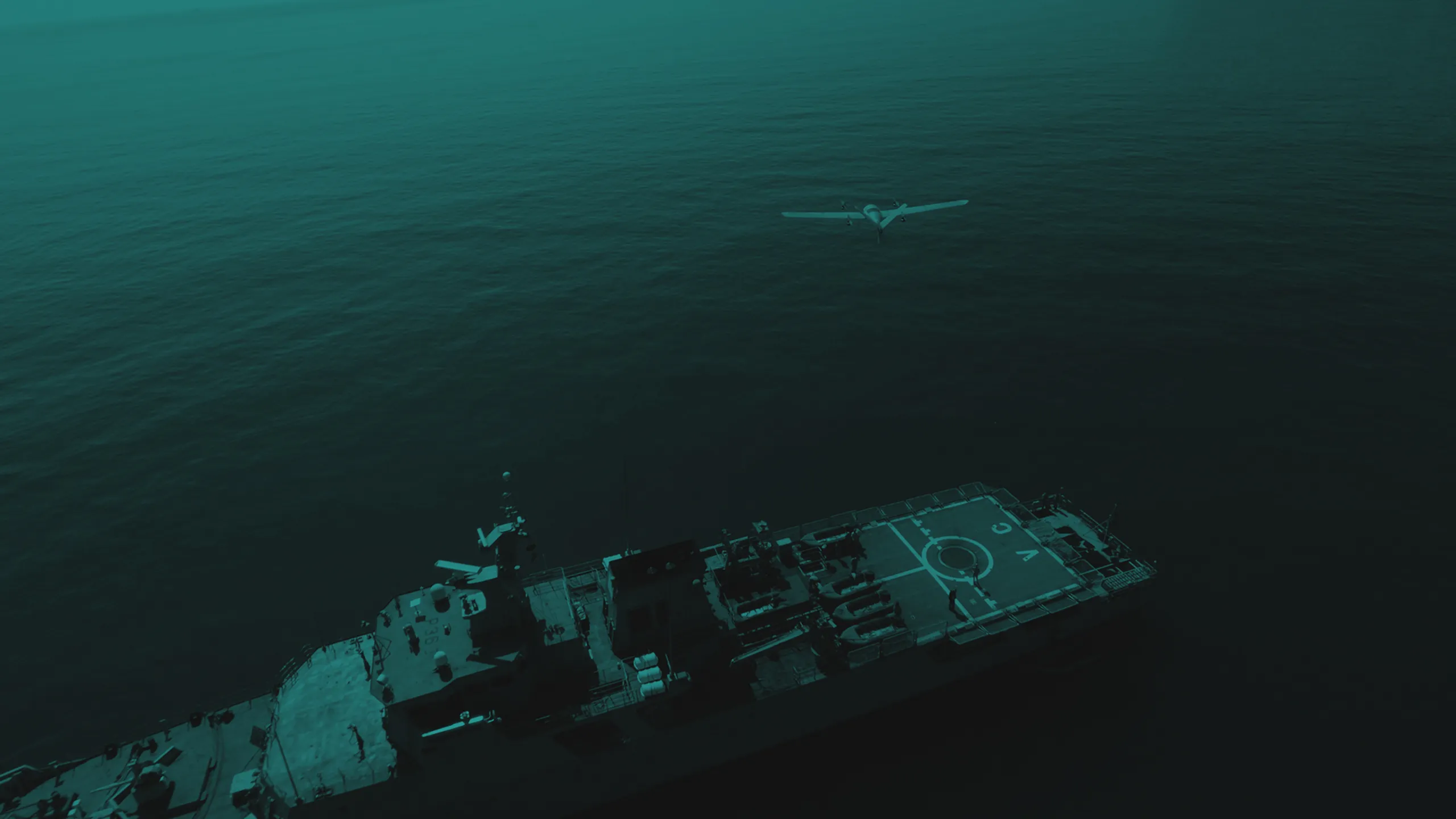
REPMUS (Robotic Experimentation and Prototyping with Maritime Unmanned Systems) has solidified its importance throughout the years as the world's largest exercise in robotic and unmanned vehicle experimentation.
Organized annually by NATO in close collaboration with the Portuguese Navy, it brings together military forces, academia, and leading technology companies to test, develop, and integrate unmanned systems into real-world maritime operations.
At a Glance
Dates: 31 August to 25 September 2026
Location: Troia, Península Setúbal, Portugal
Stand:
Why we're there
REPMUS offers us a unique, real-world environment for testing, evaluating, and integrating maritime autonomous systems alongside military, industry, and research partners. The event allows participants to demonstrate technologies under realistic operational conditions, validate interoperability with NATO and allied forces, and obtain direct feedback from end users.
REPMUS also serves as a key forum for advancing maritime autonomy, defense readiness, and international cooperation, fostering high-level collaboration to shape future concepts of operations. Our natural habitat.
{solution-link}
What we're showing
Our UAVs will participate in several key activities, including:
Anti-jamming Communications: Successfully tested in GNSS-denied environments. This guarantees reliable communication even in challenging conditions, significantly boosting operational effectiveness.
ISR Operations: Delivered real-time surveillance in maritime and coastal zones. This capability enhances situational awareness and supports improved decision-making in critical areas.
Swarm Operations: Demonstrated coordination of multiple UAVs in autonomous, collaborative missions. This innovative approach highlights our ability to operate multiple drones in harmony, maximizing both mission efficiency and effectiveness.
Practical information
REPMUS is organized by the Portuguese Navy in collaboration with NATO and partners such as the Center for Maritime Research and Experimentation (CMRE) and the University of Porto.